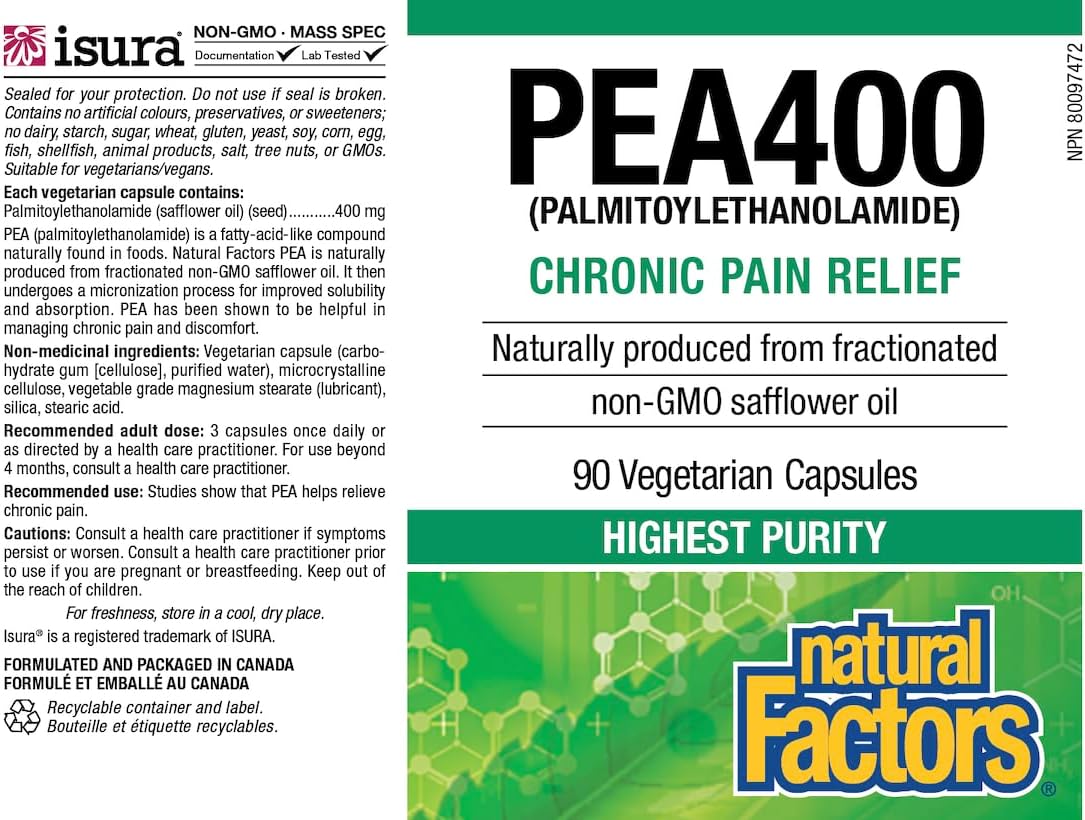
What it is: Natural Factors PEA400 delivers 400 mg of pure, micronized Palmitoylethanolamide (PEA) per capsule — a naturally occurring endogenous fatty acid amide produced by the body's nervous and immune system cells, sourced here from fractionated non-GMO safflower seed oil and processed through micronization to enhance solubility and absorption. PEA is a member of the N-acylethanolamine lipid family and an endocannabinoid system (ECS) signaling molecule with over 30 years of clinical research behind it and no known serious adverse effects. Vegan, gluten-free, non-GMO, and free from all common allergens.
How it works: PEA modulates pain and inflammatory signaling through two primary mechanisms. First, PEA activates PPAR-α (peroxisome proliferator-activated receptor alpha) — a nuclear receptor that downregulates NF-κB-driven pro-inflammatory gene expression and suppresses mast cell degranulation, reducing the neuroinflammatory and peripheral inflammatory burden that underlies both neuropathic and chronic musculoskeletal pain. Second, PEA acts as an endocannabinoid system modulator through an "entourage effect" mechanism — upregulating endogenous anandamide and 2-AG levels by competitively inhibiting their degradation enzymes, enhancing CB1 and CB2 receptor-mediated analgesic and anti-inflammatory signaling without direct cannabinoid receptor agonism. Micronization reduces particle size to increase surface area, improving intestinal dissolution and systemic bioavailability relative to non-micronized PEA forms. Clinical research supports PEA's efficacy for nerve compression syndromes, neuropathic pain, sciatica, carpal tunnel, TMJ disorders, and central sensitization.
When to use it: Indicated for adults requiring non-opioid, non-NSAID analgesic and anti-neuroinflammatory support for chronic pain, neuropathic pain, nerve compression syndromes, mast cell activation-associated discomfort, and ECS modulation. One capsule one to three times daily with food. Full clinical benefit is typically observed after 4–8 weeks of consistent use. Consult a healthcare practitioner before use if pregnant, breastfeeding, taking medications, or managing a medical condition.
Serving Size: 1 Capsule
Servings Per Container: 90
Suggested Use: As a dietary supplement, take 1 capsule 1–3 times daily, or as directed by your healthcare practitioner. Taking with food may support comfort and consistency.
| Ingredient | Amount Per Serving | % Daily Value |
|---|---|---|
| Palmitoylethanolamide (PEA) (safflower oil) (seed) | 400 mg | † |
† Daily Value not established.
Other Ingredients: Microcrystalline cellulose, vegetarian capsule (carbohydrate gum [cellulose], purified water), magnesium stearate (vegetable grade), stearic acid, silica.
Caution: Consult your healthcare practitioner before use if you are pregnant, breastfeeding, taking any medications, or have a medical condition. Keep out of reach of children.
✓ Vegetarian ✓ Vegan ✓ Gluten Free ✓ Dairy Free ✓ Soy Free ✓ Egg Free ✓ Corn Free ✓ Nut Free ✓ Non-GMO ✓ No Artificial Colors, Flavors, or Preservatives
Key Ingredients:
Palmitoylethanolamide (PEA) (micronized, from non-GMO safflower seed oil) — 400 mg Palmitoylethanolamide is an endogenous N-acylethanolamine fatty acid amide produced by nervous and immune system cells in response to pain and inflammatory stimuli, naturally occurring in foods such as safflower lecithin, soybeans, peanuts, and egg yolks — delivered here at 400 mg per capsule as a naturally sourced, micronized extract from non-GMO safflower seed oil, with micronization improving solubility and bioavailability relative to non-processed PEA forms. PEA exerts its primary analgesic and anti-inflammatory activity through PPAR-α nuclear receptor activation — downregulating NF-κB pro-inflammatory gene expression and suppressing mast cell degranulation — alongside indirect ECS modulation through competitive inhibition of anandamide and 2-AG degradation enzymes, amplifying endocannabinoid receptor signaling without direct cannabinoid agonism. Over 30 clinical trials support PEA's efficacy for neuropathic pain, nerve compression syndromes including sciatica and carpal tunnel, TMJ disorders, central sensitization, and mast cell activation-associated inflammatory conditions — making PEA400 a clinically versatile, well-tolerated non-opioid, non-NSAID pain and neuroinflammation support option for practitioner-directed protocols.